80 · Imperial Rome · Europe
The chamber score
Dies Irae
Giuseppe Verdi · Messa da Requiem, 1874
Fifty thousand people came to watch judgment. The Requiem still does.
An original chamber arrangement in the climate of the work. The recording is not a copy. It is the room answering.
You already feel this
You know the architecture of the crowd. The meeting. The comments. The family table. The feed. The fear is not that you will fail. The fear is that if you fall, they will not look away — they will lean in. You have been both the seat and the sand. You remember which one felt like dying.
The original
Opened in 80 CE. Estimates put capacity between fifty and eighty thousand. Gladiatorial games, animal hunts, public executions — entertainment engineered as a civic machine. The hypogeum under the arena was a factory of trapdoors and cages. We inherited the ruin and called it culture. The seats still face inward.
The rebuild · A machine for watching
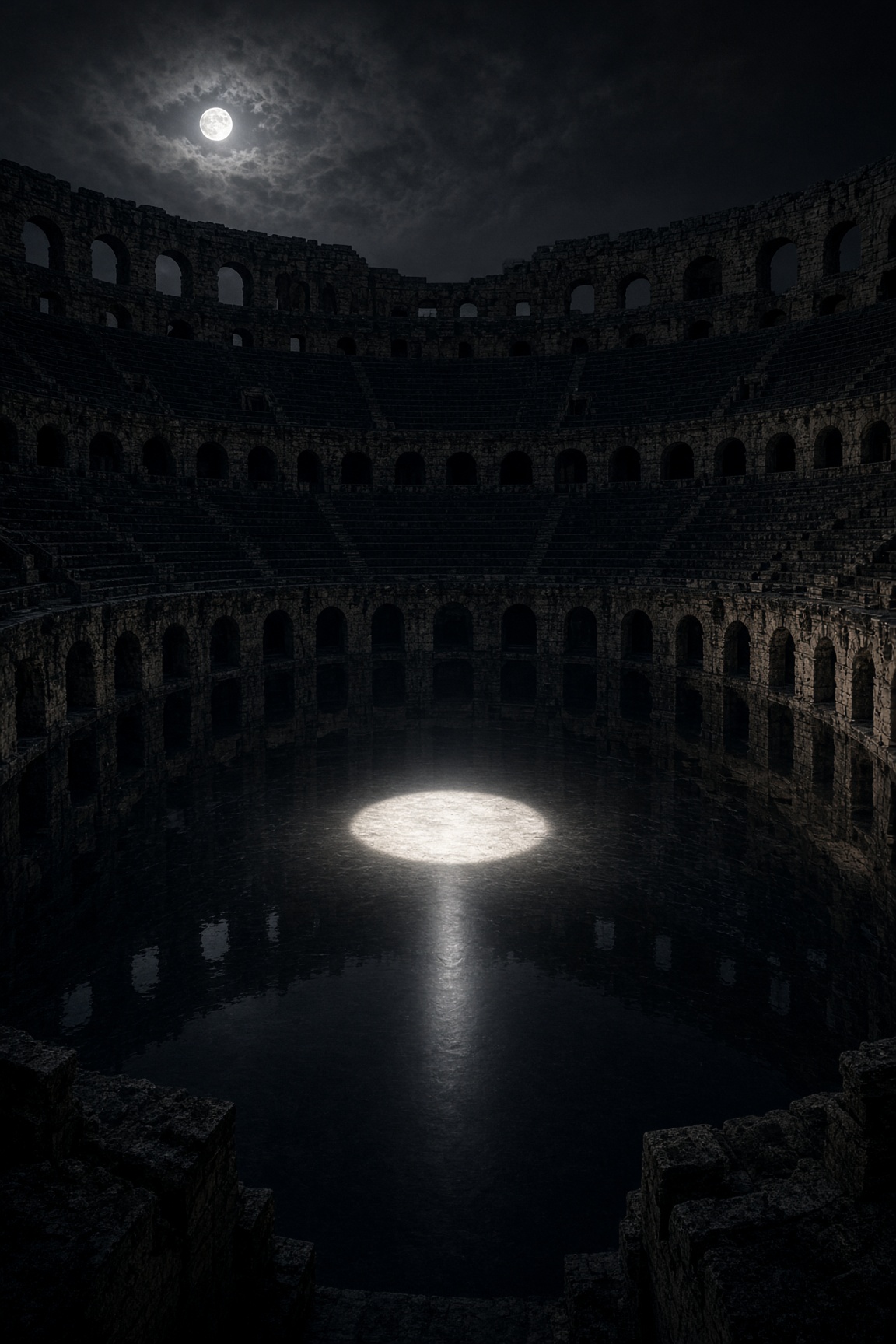
We rebuilt the arena as a dark mirror. The seats recede into shadow. A single hard light hits the center, where a person would stand. Fear here is spectatorship — the terror of being the show.
01
The floor is a mirror
In the rebuild, you cannot tell if you are looking at the sand or at yourself. That is the point. The Colosseum was never only about violence. It was about a city agreeing to sit together and need a victim. Modern rooms are quieter. The geometry is the same.
02
No one is in the cheap seats
Fear tells you that everyone is watching. Sometimes that is vanity. Sometimes it is accurate. The rebuild leaves the stands full of absence — indentations in stone where bodies would be. You feel them anyway. You always have.
03
Leave the arena
The building cannot repent. You can. Walking out of the rebuild is a small rehearsal: stepping off the sand without performing the fall they came for. Fear does not vanish. It loses its architecture.
Shift the feeling
What if Colosseum was rebuilt as something else?
Ask the architect